
Reaching the Nones & The Dones
(Credits: Contextual Intelligence, Unlocking the Ancient Secret to Mission on the Front Lines by Leonard Sweet and Michael Adam Beck and an article by Parker Haynes, Pastor of St. Timothy’s UMC in Brevard, NC)
When considering the church of 2025 and beyond, something new is struggling to be born.
The current Constantinian attraction mode of the church is a mental model not connecting with a large group of our culture. The church must address four types of religious sensibility: nones, dones, somes and comes.
The fastest-growing segment of the population are nones and dones – those who say they have no religious affiliation or those who say, “been there, done that, no more.”
The number of somes (those who identify with a religion but only attend sporadically) and comes (the faithful) are diminishing faster than anyone wants to admit. Increasingly we are finding ourselves in a Judges 2:10 situation:
“Moreover. That whole generation was gathered to their ancestors, and another generation grew up after them, who did not know the Lord or the work that he had done for Israel.”
If the church is to target the nones and the dones we must devise a strategy that understands and addresses the culture in which we live.
The Bible has often been compared to a roadmap, but a map will not do you any good unless you know where you’re at. Absalom, the son of David, got hanged because he didn’t know the lay of the land. He didn’t know where he was.
The cultural trend is toward neglecting and/or abandoning God and the Biblical principles that have been the framework for our systems of government, law and morality. Leonard Sweet wrote, “It’s not just that we live in a world that has banished the gods but not the devils. We live in a world that has made gods of the devils.”
Jesus taught his disciples to be canaries in the coal mine, to hone their competencies in contextual intelligence. One aspect of this was learning to read the signs of the times.
“You know the saying, ‘Red sky at night means fair weather tomorrow; red sky in the morning means foul weather all day.’ You know how to interpret the weather signs in the sky, but you don’t know how to interpret the signs of the times!” Matthew 16:2-3
Again, in Luke’s gospel, Jesus chastised many for their unfitness in sign reading; “He also said to the crowds, “When you see a cloud rising in the west, you say at once, ‘A shower is coming.’ And so it happens. 55 And when you see the south wind blowing, you say, ‘There will be scorching heat,’ and it happens. 56 You hypocrites! You know how to interpret the appearance of earth and sky, but why do you not know how to interpret the present time?” Luke 12:54-56
“You see, but you do not observe.” (Sherlock Holmes to Dr. Watson)
Once our eyes get habituated to something, we have trouble seeing it. If you aren’t accustomed to an environment, you tend to see more of what is there than when you are in a familiar setting.
Fourteen times in the Gospels and three times in the Revelation, Jesus directly tells his disciples, or implies in his teaching, to watch: give strict attention to, be cautious, actively pay attention.
A trademark saying of Jesus is “he who has ears to hear, let him hear…”, pay close attention. He is quoted saying this six times in the Gospels and eight times in Revelation. He wants us to pay attention. Effective ministry requires us to be aware of our environment…our context.
In the Old Testament, the tribe of Issachar is commended for the ability to discern the times and determine an effective strategy to lead Israel.
“Of Issachar, those who had understanding of the times, to know what Israel ought to do, 200 chiefs, and all their kindred under their command”. 1 Chronicles 12:32
Issacharians of our day would possess a high level of contextual intelligence. Their contextual intelligence is oriented toward interpreting the scriptures and reading the signs of a specific context.
Contextual intelligence (CQ) is the ability to accurately diagnose a context and make the correct decisions regarding what to do.
In the real estate business, location is king: “Location, location, location.” In the discipleship business, Jesus is king but context is queen.
First comes the content – “in the beginning was the Word”, next comes the context, “and the Word became flesh and dwelt among us.”
Contextual intelligence and the incarnation
Jesus was conceived in Mary’s belly surrounded by amniotic fluid, born in a dirty, damp cave alongside smelly animals, raised in an insignificant agrarian village in the backwaters of Galilee, and worked with his hands in Joseph’s masonry shop. For the thirty years before Jesus ever practiced ministry, he lived with and among those he came to serve. For those of us who want to understand and lead in the context in which we serve, that’s what it looks like.
The Incarnation teaches us that God cares about context. When God took on flesh, God became a first-century Jewish baby born of a teenage virgin and laid in a manger. God knows what it is to be counted among the marginalized, the insignificant, and the poor.
That is the context in which God came to this earth. That is the particular time, place and culture God entered into, spent time understanding, and where eventually, after many years, he started his ministry.
Contextual intelligence is another way of talking about what every missionary does before they leave home for the mission field: learn the native vernacular and culture.
Doing contextual ministry is also about learning to be with the people we serve. As Sam Wells has noted in his A Nazareth Manifesto, the incarnation is so central in Christian theology because God is more about with than for.
Everything God has done and is doing for us, whether the creation of the world or the cross or the resurrection of our bodies, God does it to be with us. With is about simply enjoying and delighting in the presence of the other. No agenda, not using someone to get something for yourself, just offering yourself to another human being.
As ministry leaders, we prefer doing the kind of ministry that bears low hanging fruit, produces constantly growing numbers and success stories, and gives us clear boxes we can check when we’re finished. We prefer for over with.
Due to the missional efforts of the church to alleviate poverty, feed the hungry, and combat injustice, the world expects Christians to be more interested in for than with. But we make a mistake when we think that for is more important, more fundamental or more crucial to ministry than with. After all, offering yourself by being with another person doesn’t really change their reality or do anything to help them in their situation, does it? We think with is simply not pragmatic.
The first disciples, followers of “the way” of Jesus, earned the title “Christians,” literally “little Christs”. With no evangelism campaign, no professional clergy, and no dedicated buildings, the faith grew by the millions for 300 years across the Roman Empire. It grew primarily through the early followers who understood, lived with and related to those around them in a world often hostile to their faith.
If there is one Christian message that will speak to nones, it’s the message of the with of the Incarnation.
If the West today is “Post-Christian,” then we are closer to the pre-Christian world Jesus lived in than ever before. In Jesus’ world, most did not think the gods cared about the details of their life. God was one who did something for them or against them, an act of tremendous power, a sacrifice in a temple or a terrible sea storm.
But what Jesus demonstrates in his incarnation and life on earth is the profound impact with can have.
Many who experienced the radical nature of the with that characterized Jesus’ ministry, experienced something new that transformed their lives and reflected the deepest depths of the heart of the Triune God.
Just like the world two thousand years ago, people long for a God who loves them so much that He created the world, sent His son Jesus, and makes eternal life possible so He can exist with us.
We are entering a brave new world at 5G speed. Regarding the development of contextual intelligence: As irritating as it may be, we should pay attention to the cultural codes and conventions. Pay attention to who is getting pulled over by the PC culture cops and failing their sobriety tests. You can still hold to your convictions but at least try to have an understanding of where the other side is coming from. No matter what that other side is.
Also, Census data is very helpful to give an overview of our ministry context.1
Regarding the introduction of fresh ministry methods: Newport Assembly is located in Perry County which has a more traditional mindset. We enjoy our expression of worship and togetherness. It would be foolish to totally change the way we currently do church. It would also create a riot among the comes.
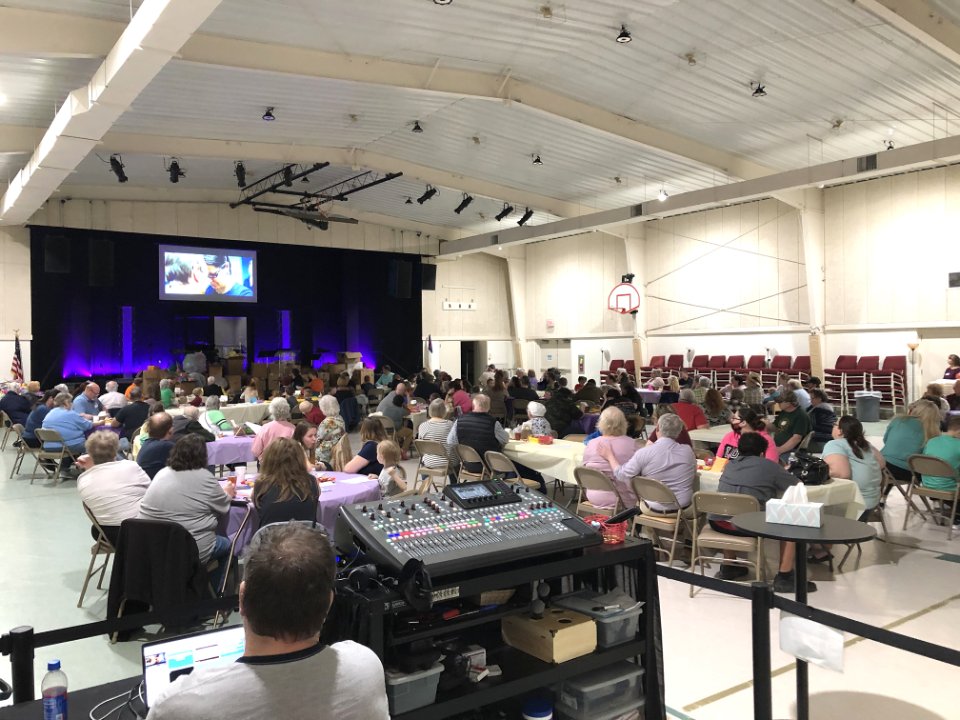
However, we recognize an emerging population that is neither impressed nor interested in this model. It made sense for us to start fresh expressions2 of ministry to this community in addition to our existing structure. The focus is on incarnational ministry…being with people. We are learning the importance of being with those we serve. It’s not about gathering, it’s about togethering. People often must belong, before they believe. That subtle shift in thinking is huge.
Questions:
1. What do you know about your community, your sphere of influence? In what ways are you intentionally learning more about your context? Suggestion: walk, pray, observe, engage.
2. Where are you discovering Jesus at work in your community?
3. How are you, your church, at being with the people in your community? Not only doing ministry to them or for them, but finding ways to be with them?
4. We see an example of Paul’s contextual intelligence and incarnational style of ministry in 1 Corinthians 9:19-23 (NLT2) ”Even though I am a free man with no master, I have become a slave to all people to bring many to Christ. 20 When I was with the Jews, I lived like a Jew to bring the Jews to Christ. When I was with those who follow the Jewish law, I too lived under that law. Even though I am not subject to the law, I did this so I could bring to Christ those who are under the law. 21 When I am with the Gentiles who do not follow the Jewish law, I too live apart from that law so I can bring them to Christ. But I do not ignore the law of God; I obey the law of Christ. 22 When I am with those who are weak, I share their weakness, for I want to bring the weak to Christ. Yes, I try to find common ground with everyone, doing everything I can to save some. 23 I do everything to spread the Good News and share in its blessings.
- While Paul’s ministry was very effective, what are some of the challenges he faced?
- When considering or engaging in this type of ministry, what potential problems may we encounter?
- What practical training and boundaries should we establish to prepare and protect our ministry team?
- What coaching and networking can we access to learn best practices and avoid pitfalls?
Helps
1Tom Rees supplied information on Perry County based on Census data from the Percept Group, Inc. www.perceptgroup.com. You can request a report for the area you serve.
2 Fresh, non-traditional ministry dialogue and ideas. https://freshexpressionsus.org/; Dinner Church Ministry https://dinnerchurch.com/